



I had worked my way through the grocery store from the back to the front and now stood among the fresh produce considering seedless English cucumbers when a diminutive lady in a sundress and glasses walked by and backtracked to tell me she really liked my T-shirt.
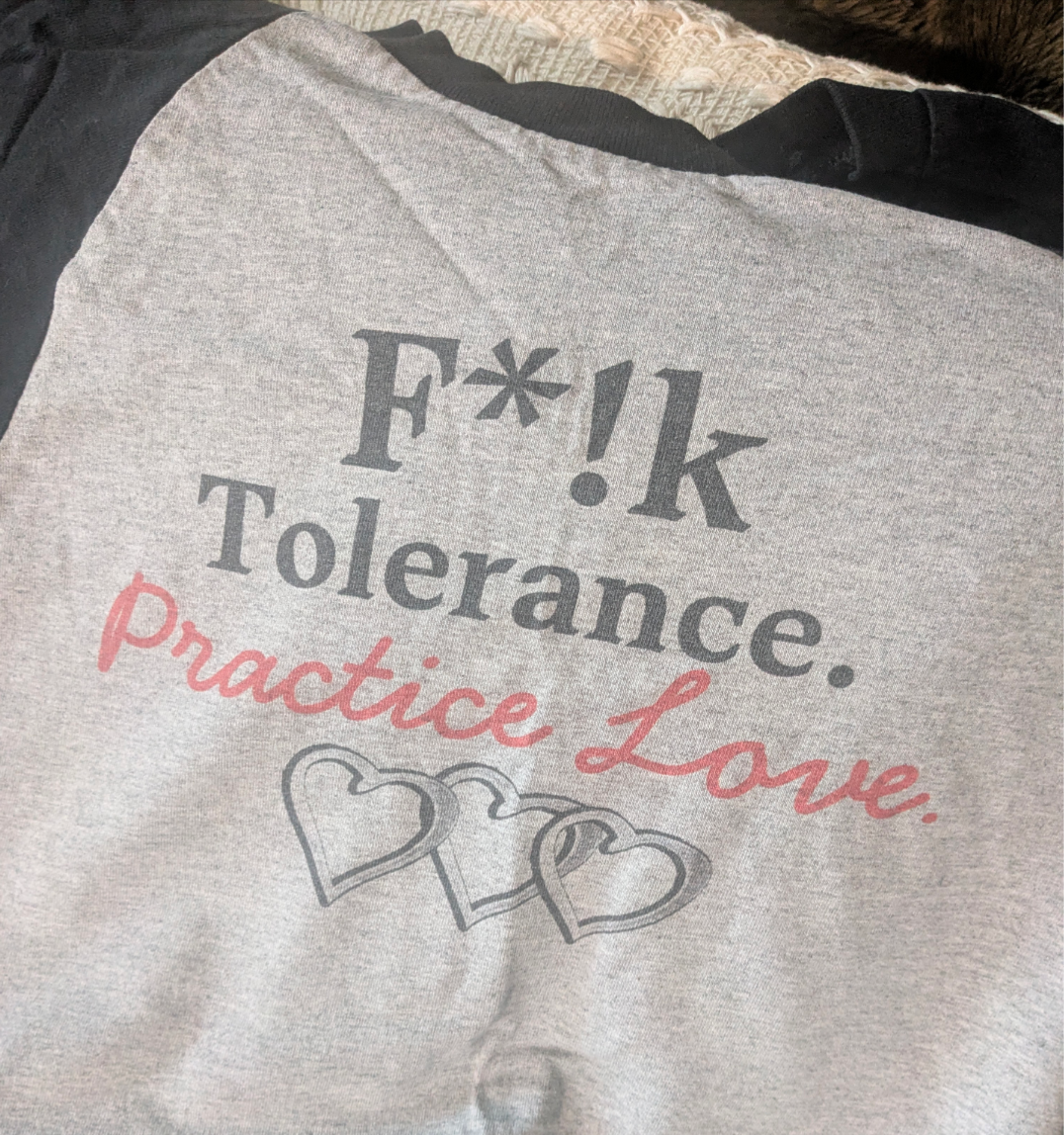
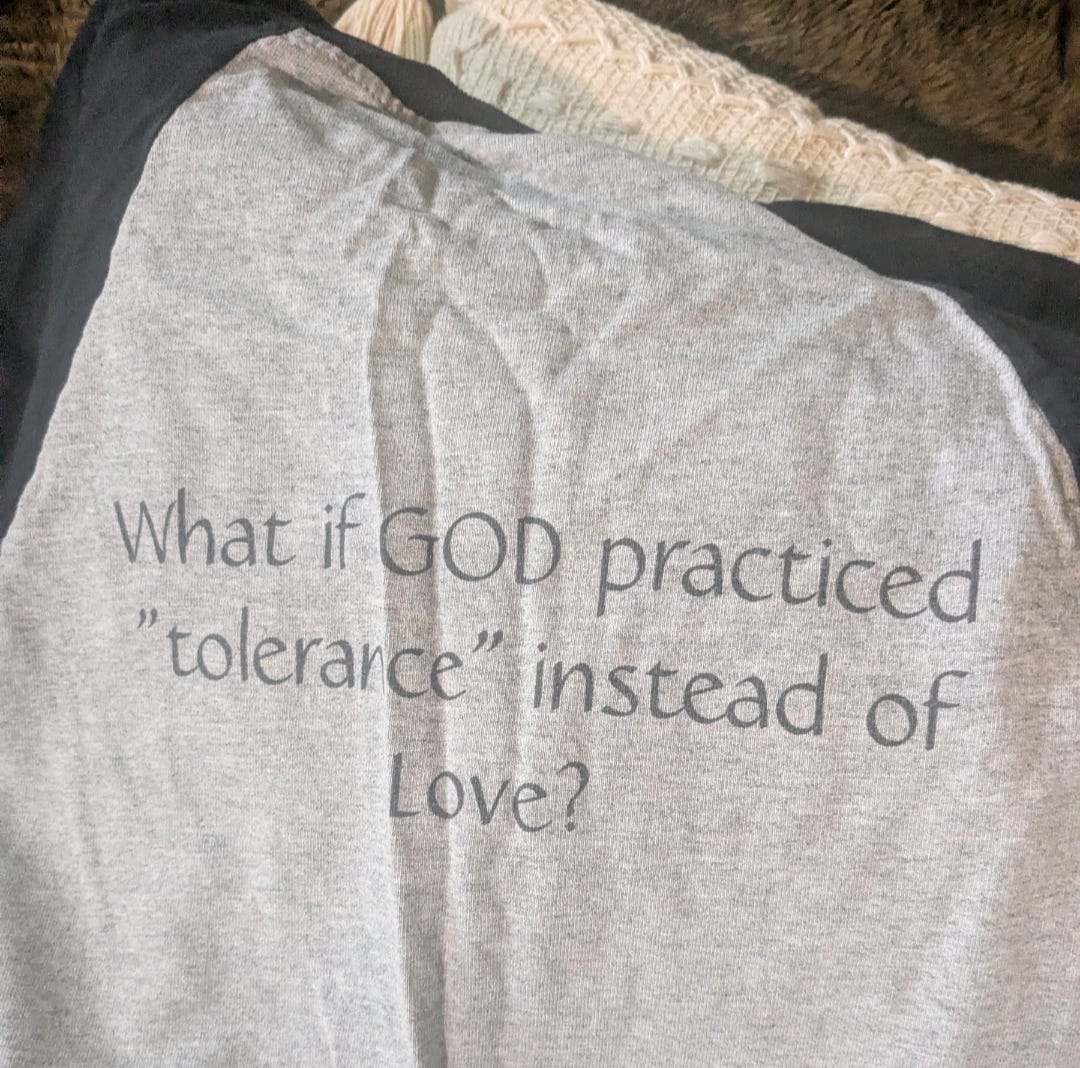
I looked down at my own chest to remember what she was commenting on. Across the shirt was the proclamation:
“Difference Isn't Dangerous.
Ignorance Is.”
I thanked her and she asked where I had bought it. And then, she paused for just a moment as I watched her lose the battle with her own internal Observer, likely doing its egoic best to keep her from saying more. She didn't listen.
“Why are people so mean?,” she asked. “I live here two years now,” she said clearly in very intentionally articulated words, “and people here will tell me to go back where I came from.”
My jaw sets like flint against my rage and likely rising tears over the racism she's telling me about.
In one hand she holds a round purse left unzipped, and open, which I point out to her and in the other hand heartburn medicine. She and her family are from Malaysia. She and her husband wanted to follow their daughters, one of whom wanted to go to Ohio State University. Both daughters are graduating college now. She told me she is a university professor herself and told me of the constant and overt racism she endures constantly from her colleagues. She told me how, despite the facts that reveal her exemplary performance consistently, her published peer-reviewed articles, they exclude her, treat and tell her in their behavior and sometimes by their words, she said, “that I’m not good enough, that I don't belong, that I don't look like them or sound like them and I shouldn't be here.”
My stomach turned by habit to knot but by Spirit didn't, by Spirit we bonded, by Spirit spoke.
“Listen,” I said, like she really should, “I wanna tell you something: I’m sorry that happened. You're wonderful and those people are just awful racist assholes.” She looked into my face silently as I repeated it. You're wonderful. You do belong
and I'm glad you're here.
That might have been too fast: You're wonderful, they're awful racists and I’m sorry for my language. I just met you.”
“But I do…” and she listed accomplishments and responsibilities and considerations she constantly makes that leaves her exhausted and confused as to why people treat her so badly. She diligently added, “I don't know if you can tell but I only have fifty percent of my hearing.”
Again, like I had a right to, I said, “Listen, my spouse is African American and he can tell you that as a black person in this country, you can be as educated, talented, beautiful, and refined as you can be but to a stupid racist, you're still just an N-word. And as a gay man, I can tell you no matter how “respectable” you are, how much you love your parents, your Jesus, your country; to a homophobe, you're still just a fa**ot. I'm sorry to tell you but none of us can perform our way out of other people's bigotry.”
She apologized for talking so long and saying so much and made excuses, saying she had just been to a Walmart where one of the local hilljacks told her she had taken their job. “So I drove here and was just kinda walking around, it just makes you feel so broken.”
For me, I must say, I did pretty good at not interrupting but here I interjected. “Could I ask you to consider a different word there. Maybe you’re not broken. Maybe you're injured. And I promise, you are not responsible for taking a job from any Croc and flannel pajama wearing hilljacks shuffling around Walmart.”
I asked if she had a spiritual practice of any kind that might help nurture and ground her. She tossed the words, “Well, yeah, I pray,” on the floor and rolled her eyes like that tired old idea put a bad taste in her mouth.
“Wow,” I said, “you didn't react like that when you talked about your daughters. “Yeah, I have two girls, whatever,” I gently ribbed her.
“Well, no,” she said, “it's just that after so much…” and she trailed off as I offered “it's hard to not be angry with God.”
I gave her a thumbnail rundown of my own spiritual path and mentioned the biblical creation story of the Accusser in that story being the one to induce shame, as that's what they do, being devils, so it's urgent that we understand who we're listening to. Who said what we believe, when, and why?
I offered two mantras, one Gurbani, one Sanskrit.
“Sat Nam”, I explained, means “Truth is Your name, your identity.” It's not what anyone else has said. It's not what sticks to us when we walk away from abuse; it's Truth, the Truth of your belovedness and belonging is your very identity. And “Namo Namaha”, means “I bow, I surrender this as not mine, but Yours”. These boundaries are essential: what is ours, what belongs to other people, and what can only belong to God. What is and isn't ours can be hard to learn but it's essential to health and peace.”
She raised her shoulders and scrunched her face and said, “You know because I’m Asian..”
“Oh, we're gonna get all racial now?,” I joked.
She again brought up doing so much of this for her daughters.
“Ma’am, your daughters are grown. I’ma need you to release your daughters into adulthood.”
She laughed and said it felt like a kind of self-protection for herself, her care for her daughters. I understood this. Purpose can feel protective. And other people's purposes, even our children's, especially our children's, can make for an on-demand reason to avoid our own needs and interior health.
She referenced the music conservatory where she had also studied. “Seriously?,” I asked, “and you're a musician, too? What instrument?”
“Piano,” she said.
“Wow, my spouse is a pianist, too.”
Just a quick recap for those of you keeping score at home: She has a PhD in a medical field, she’s a tenured professor with peer-reviewed published articles, a successful husband, and two daughters, both graduating college now.
I pointed this abbreviated list out to her as worthy of respect, even pride, when she offered again, “Maybe because I’m Asian…”
“You're codependent?”, I finished her sentence with my question, adding “I have good news, it's not ethnic, it's learned so it can be unlearned.”
We discussed the only three real options there ever are: accept it, change it, or leave it and it dawned on me that if I couldn't accept missing the bus, I needed to wind this unexpected conversation up. How long had we stood here talking? A half hour? Possibly.
She had even lived in my beloved New Mexico and we high-five no less than half a dozen times over our shared love of sun and mountains and open natural space.
Aware that I had introduced myself but she hadn't, I asked how long we’d need to talk before she offered her name.
She said her name is “Eve”.
“Well, I said, gaining a slight charge from telling on myself, it’d be just like me to say my name was Adam but I already said my name was “Preetam” and you might think I was being flirty and I’m not, just corny.”
I shared my writing online with her and she said she’d look for it and I said I’d look for her and I am. I feel confident she will show up again, whether I recognize her or not, as another opportunity to belong and re-member each other to each other, even in the grocery store produce section in a hateful Midwest state.
-pdk
As we share in the wonder of growing in love, Preetam Das
Music credits: Deva Premal and Mirabai Ceiba’s version of “Ocean/Eyes” , artists retain all rights and our gratitude.


